
The short answer
Start smaller than you think.
Let your cat meet the toothpaste and brush before you try brushing. Build from a brief lip lift to a few gentle strokes on the outside of the teeth. Daily brushing is the goal, but forcing a frightened or painful cat can make future care harder.
Before you start
Choose a quiet time when your cat is settled. You need a small, soft pet toothbrush and toothpaste made specifically for cats. Never use human toothpaste. Cornell advises that some human products can be toxic to cats, and cats cannot rinse and spit as people do.[2]
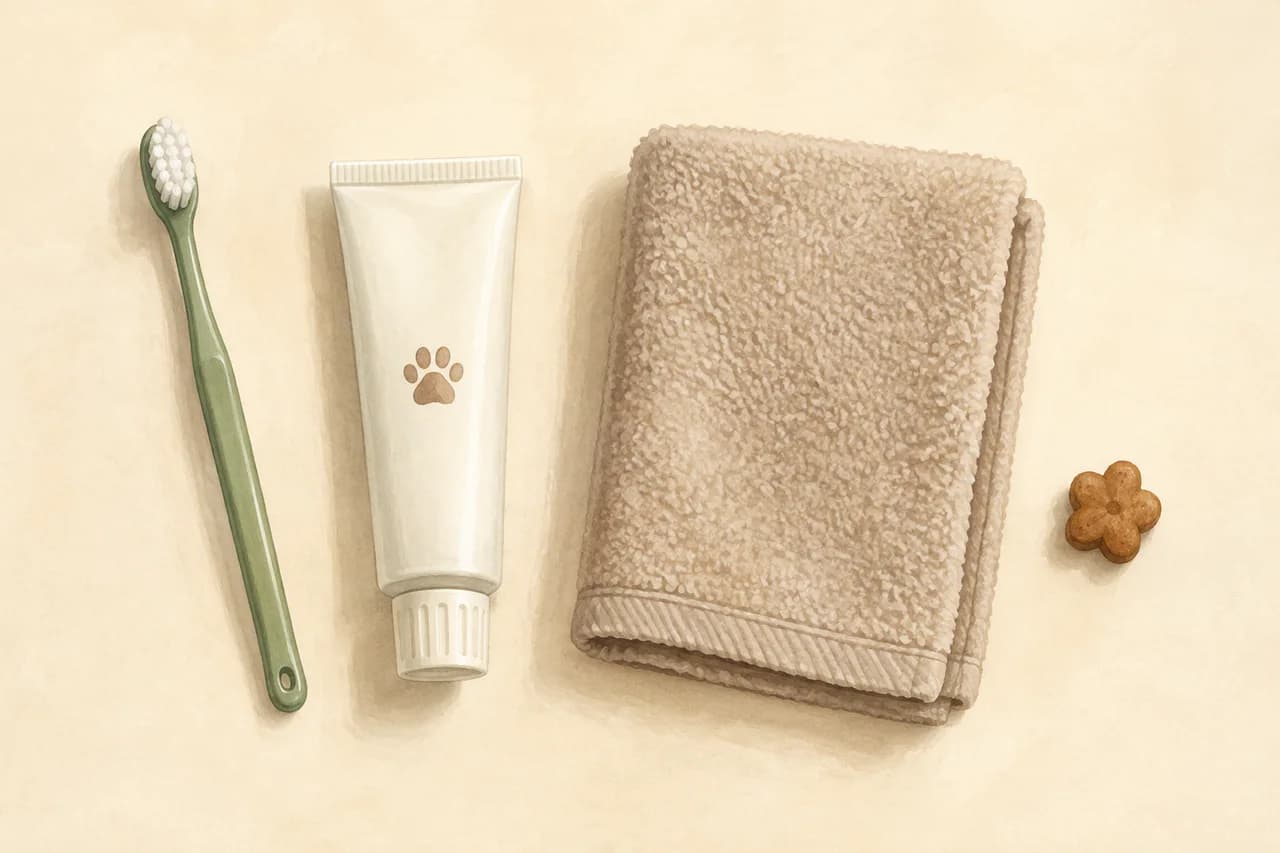
- Keep each practice session short—even a few calm seconds counts.
- Let your cat leave. Restraint and chasing turn the brush into a warning sign.
- Use praise, play, or a small ordinary reward your cat already tolerates.
- If the mouth looks sore, skip brushing and call your veterinarian first.
A calm 7-day introduction
This is a starting rhythm, not a deadline. Repeat any day for as long as your cat needs. Cornell presents a four-week introduction; taking longer than seven days is normal.[2]AAHA recommends making home oral care an ongoing, individualized routine.[1]
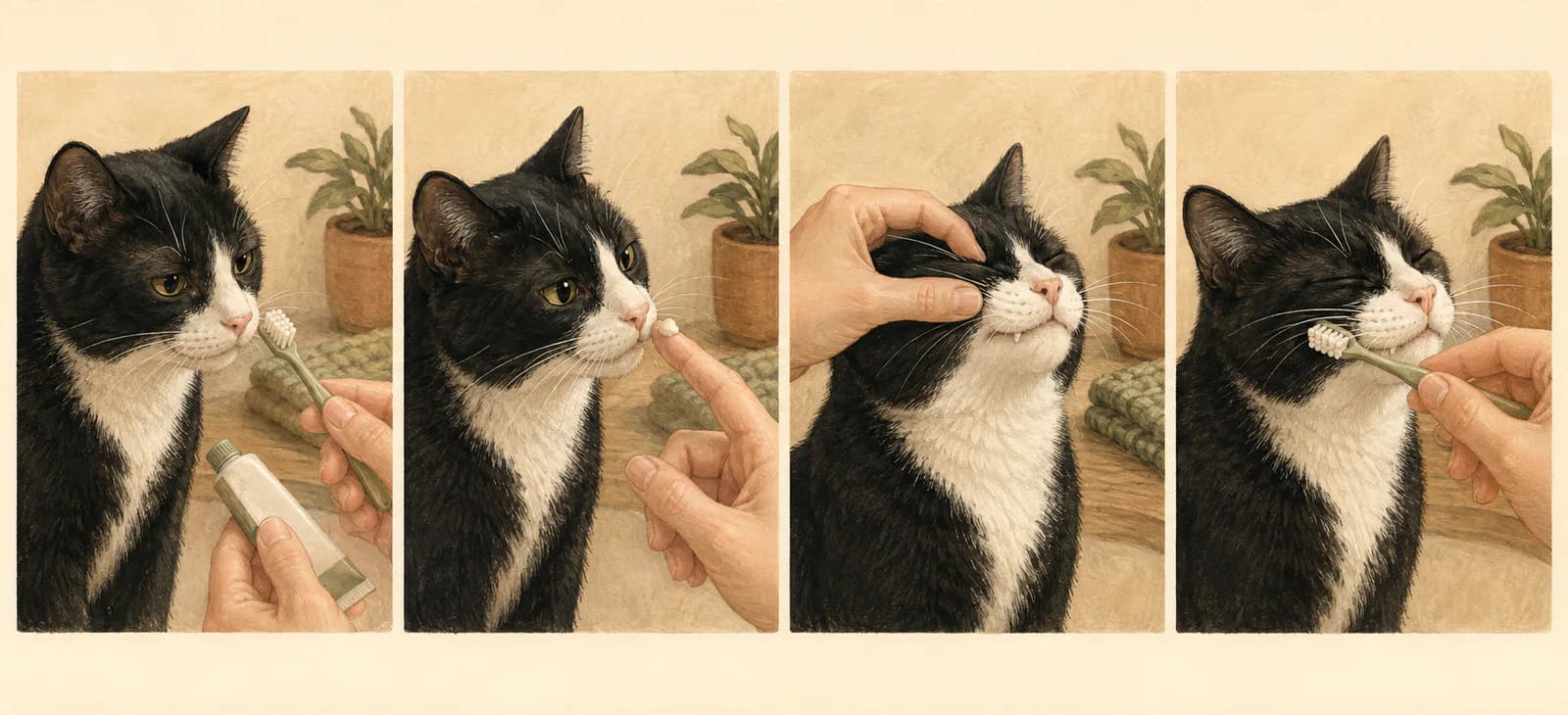
Day 1: Let the tools exist
Place the closed toothpaste and brush nearby under supervision. Let your cat sniff, then put them away.
Day 2: Introduce the taste
Offer a tiny dab of cat toothpaste from your finger. Stop after the taste and follow with something pleasant.
Day 3: Practice a one-second lip lift
Touch the cheek, gently lift the upper lip, release, and reward. Do not pry the mouth open.
Day 4: Look at the outer teeth
Lift the lip for a little longer so you can see the canine and cheek teeth. No brushing yet.
Day 5: Meet the brush
Put a small amount of cat toothpaste on the brush and allow a supervised sniff or lick.
Day 6: Try a few gentle strokes
Lift the lip and brush the outside of one or two easy-to-reach teeth. End while your cat is still calm.
Day 7: Slowly extend the session
Add a few more outer surfaces, moving toward the larger cheek teeth only if your cat remains comfortable.
How to brush once your cat is ready
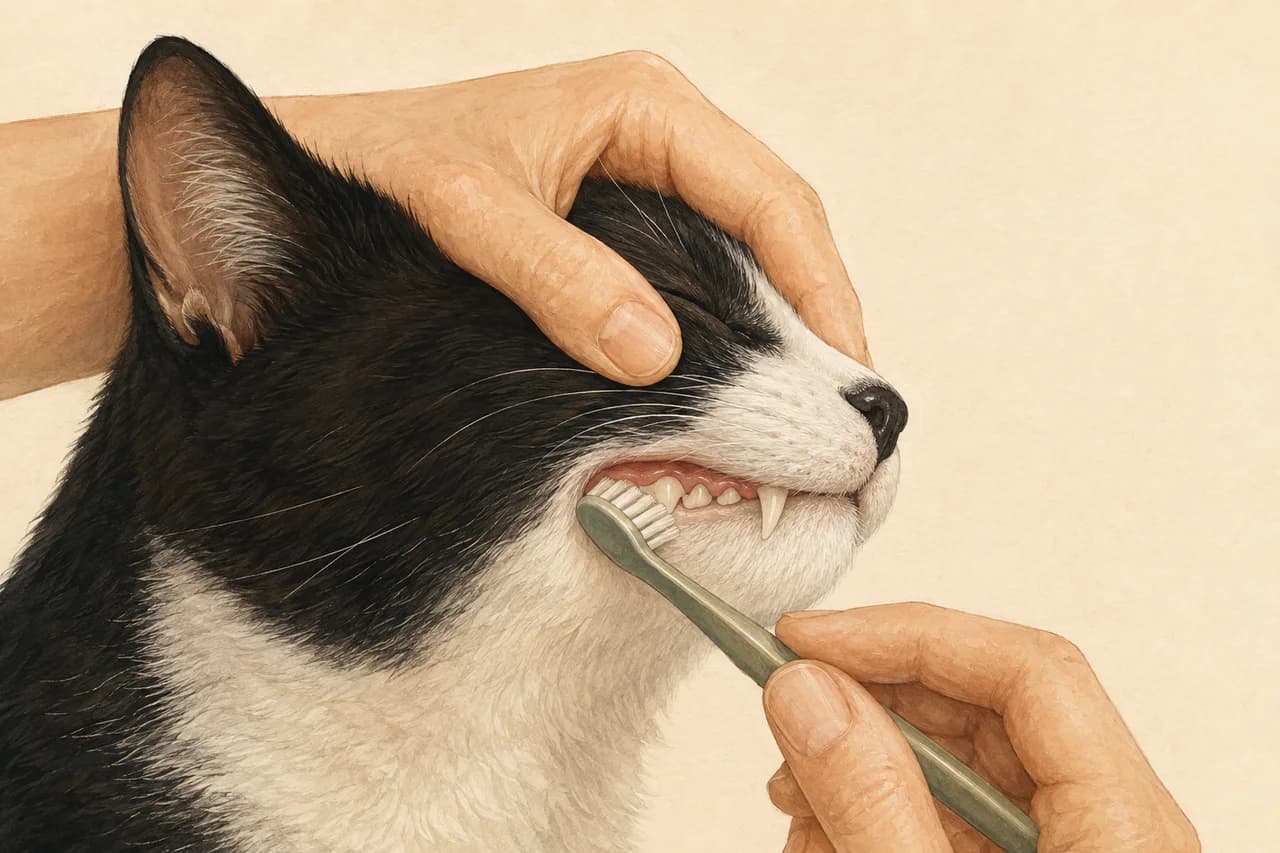
- Settle your cat in a comfortable position and keep the mouth closed.
- Gently lift the lip rather than opening the jaw.
- Angle the soft bristles toward the line where the tooth meets the gum.
- Use light, short strokes on the outside surfaces of the teeth.
- Stop before your cat becomes frightened or starts struggling.
The outer surfaces matter most for home brushing; you do not need to scrub every side of every tooth.[2]Daily plaque control is the ideal, alongside regular veterinary oral exams.[3]
If your cat will not let you brush
End the session and let your cat move away. Use these three situations to plan the next step, rather than trying a stronger hold or a different tool immediately.
- Resistance is new, or you notice a mouth or eating change. Pause mouth handling and contact your veterinarian. Cats can keep eating normally despite dental pain, so a finished food bowl does not rule it out.[4]
- Your veterinarian says home care is appropriate, but the brush is unfamiliar. Return to a step your cat accepts, such as sniffing the tools. Keep it brief and reward calm participation. Repeat that step across days or weeks before asking for more.[2]
- Brushing remains impractical. Ask your veterinarian about a cat dental wipe if gentle mouth contact is tolerated, or an appropriate dental food, treat, or additive. A wipe still requires cooperation; stop if your cat resists. These options support a home-care plan alongside veterinary checkups.[4]
Before buying, open the VOHC accepted-products list, select cats, and match the exact product and its plaque or tartar claim. Acceptance for one product does not cover everything from that brand. Bring the name and label to your veterinarian and ask whether it fits your cat’s diet and health needs.[3]
Brushing removes soft plaque, not hardened tartar. Even daily brushing does not replace veterinary examinations or any dental treatment your cat needs.[1]
Common questions about brushing cat teeth
How often should I brush my cat’s teeth?
Daily brushing is the goal for plaque control. If that is not realistic yet, keep building a calm routine and ask your veterinarian what schedule makes sense for your cat.
Can I use human toothpaste on my cat?
No. Use toothpaste made specifically for cats. Human toothpaste is not designed to be swallowed and may contain ingredients that are unsafe for pets.
What if my cat will not let me brush?
Stop rather than force the session. New resistance, sore gums, drooling, or changes in chewing need veterinary advice before more mouth handling; eating normally does not rule out dental pain. Once your veterinarian says home care is appropriate, return to an easier step. If brushing remains impractical, ask about a cat dental wipe or a suitable VOHC-accepted product and keep regular dental checkups.
Do dental treats replace brushing?
No. A food or treat is not automatically dental care. Look for the VOHC Seal when your veterinarian recommends a dental product. Mizusu treats are food treats, not dental products.
Sources
- 2019 AAHA Dental Care Guidelines: Recommending Home Oral Hygiene and Products, American Animal Hospital Association. Accessed September 9, 2026.
- Feline Dental Disease, Cornell University College of Veterinary Medicine. Accessed September 9, 2026.
- Accepted Products for Cats, Veterinary Oral Health Council. Accessed September 9, 2026.
- Feline Dental Care (2025 owner brochure), Feline Veterinary Medical Association. Accessed September 9, 2026.